
The Cherry on Top: How AUT is Collaborating with Industry to Transform Food Waste into Sustainable Solutions
For many of us in Aotearoa New Zealand, cherries represent summer. The juicy little stone-fruit are often consumed at picnics, in school lunches, and as a quintessential Christmas Day snack. But there’s more to these healthy treats than meets the eye.
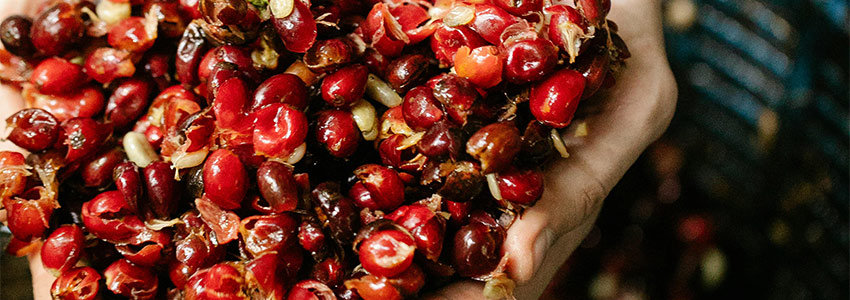
The process of turning these popular fruits into commercial juice leaves behind a significant byproduct. Across the country's juice processing industry, up to 25% of the fruit ends up as waste in the form of skins, pulp, and seeds. This creates thousands of tonnes of organic leftover, known as "pomace", annually. Typically, processors pay around $200 per tonne to send this organic matter to the landfill, creating a massive and avoidable environmental and economic cost.
At the same time, global demand for upcycled and sustainable ingredients is booming. Instead of treating this nutrient-dense byproduct as a burden, AUT has teamed up with two innovative New Zealand SMEs, Eden Juice Limited and NZ Soap and Skincare, to turn cherry pomace into high-value functional foods and cosmeceuticals.
A Partnership Grounded in Real-World Application
Led by Food Science Professor Daniel Granato from AUT’s School of Science, the collaboration is grounded in the discovery that cherry pomace is incredibly rich in powerful antioxidants.
Professor Granato aims to valorise this waste by extracting its natural goodness to create shelf-stable products. For the food sector, this means developing dry baking mixes, such as naturally coloured, antioxidant-rich muffins, snack bars, and fibre-enriched breads. On the beauty front, the extracts will be used to formulate premium, natural anti-ageing creams and antioxidant face masks.
To ensure these innovations are ready for the real world, the industry partners are highly involved. Eden Juice Limited is supplying the cherry pomace straight from their processing operations and sharing vital industry metrics. Meanwhile, NZ Soap and Skincare will be co-developing and testing the cosmetic formulations, leveraging their existing export markets in China, Canada, and the USA. The partners are even bringing a professional pastry chef on board to design and test the culinary feasibility of the dry baking mixes.
“It’s exciting to take something that is currently thrown away and turn it into premium, healthy food products and cosmeceuticals to that help improve skin appearance”, says Professor Granato. “The Tīmatanga Grant is the exact catalyst we needed as it allows us to move our ideas out of the lab and start creating real, tangible food and skincare prototypes alongside our wonderful industry partners. We’re grateful to AUT Ventures for making this kind of funding accessible to us.”
Backed by the Tīmatanga Initiate Grant
To bring this circular-economy initiative to life, the development is being backed by a nearly $40,000 Tīmatanga Initiate Grant, an AUT Innovation Fund initiative designed to support promising research with real-world collaborators.
With the research already underway, this funding will support the crucial laboratory and prototyping phase. Professor Granato will focus on finding the best ways to dry and extract the cherry nutrients, so the final products keep their vibrant colour and health benefits.
Paul Sowman, Head of the School of Science, says the project is a shining example of where sustainable science is heading.
“This research perfectly captures what we strive for at AUT, solving real-world problems through innovation and sustainability,” says Sowman. “We are proud of Daniel’s work, and we are thrilled to see our researchers collaborating so closely with innovative businesses to turn great science into tangible products.”
Beyond the creation of exciting new goods, this project highlights the power of university-industry collaboration to solve pressing environmental challenges. By diverting organic waste from landfills, the initiative reduces emissions and disposal costs while positioning Aotearoa New Zealand as a leader in sustainable innovation. It’s a brilliant example of how, with the right science, one industry's waste can truly become another's premium ingredient.